
There’s a Saint in the Altar?
A long-standing Tradition in the Church, going all the way back to the first Apostles, is that the Mass is celebrated “over the tombs of the martyrs”. This was initially the case in the first days of the Church because of both the need for secrecy and the importance placed on the graves of the martyrs. Crypts and catacombs provided a hidden yet significant place for the sacrifice of the Mass to take place. Over the years, especially after the Roman legalization of Christianity, great Basilicas were built over these locations, including the Basilica of St. Peter in Rome.
This Tradition, which would later be made official and required by Pope Felix I in the year 270, is clearly in line with the images of Heavenly worship in the Book of Revelation. If Heaven’s liturgy involves all the Saints and Angels coming before God and worshipping, then not only should we do the same, but we should remind ourselves of that reality: at every Mass, the Congregation is much bigger than it looks. All the Saints and Angels are present at the Mass, and the keeping of relics in the Altar is a great way to remember that.
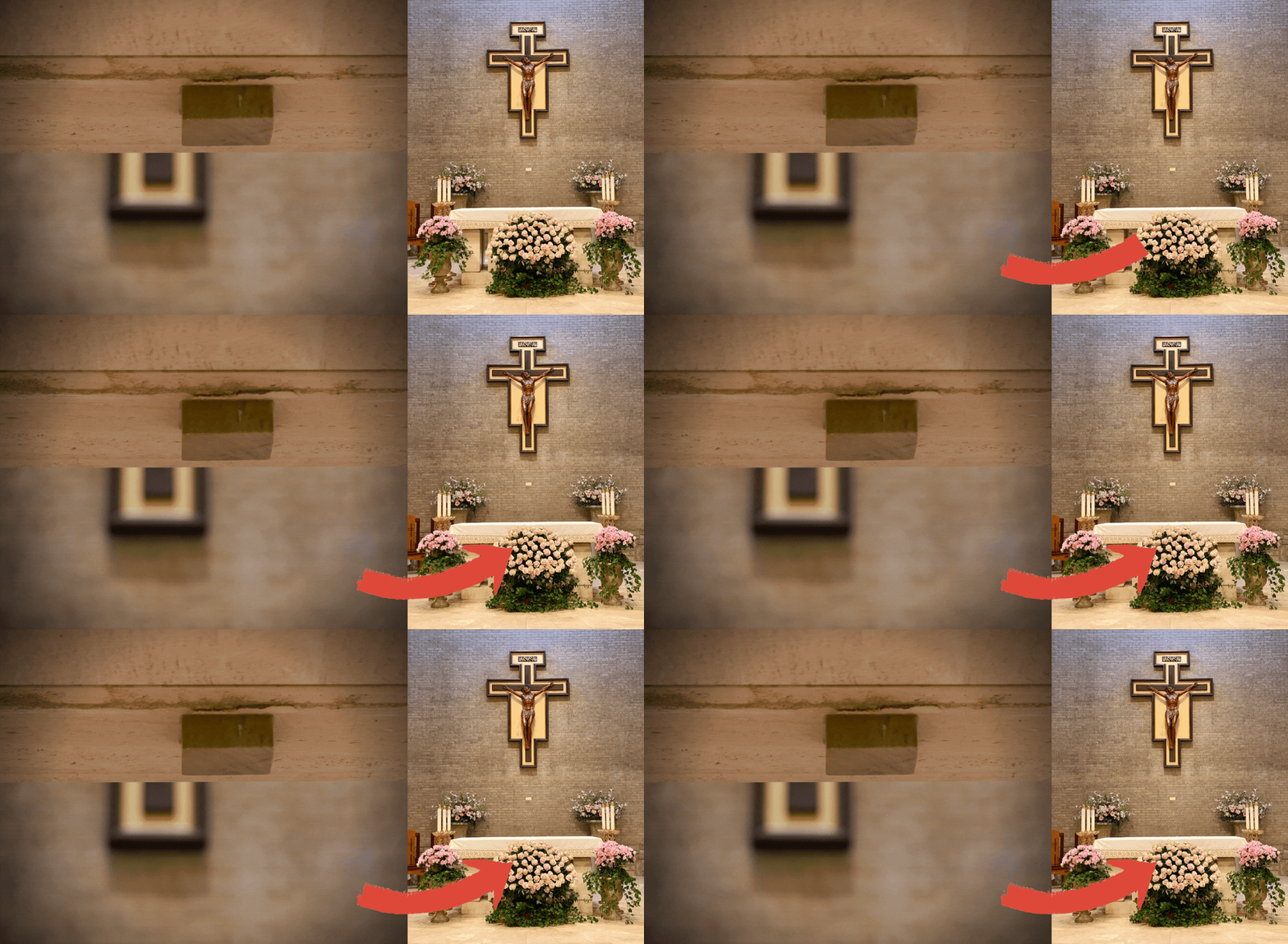 In our Sanctuary, the relics are permanently kept in this marble box affixed to the underside of the Altar.
So, Whose Relics are in Our Altar?
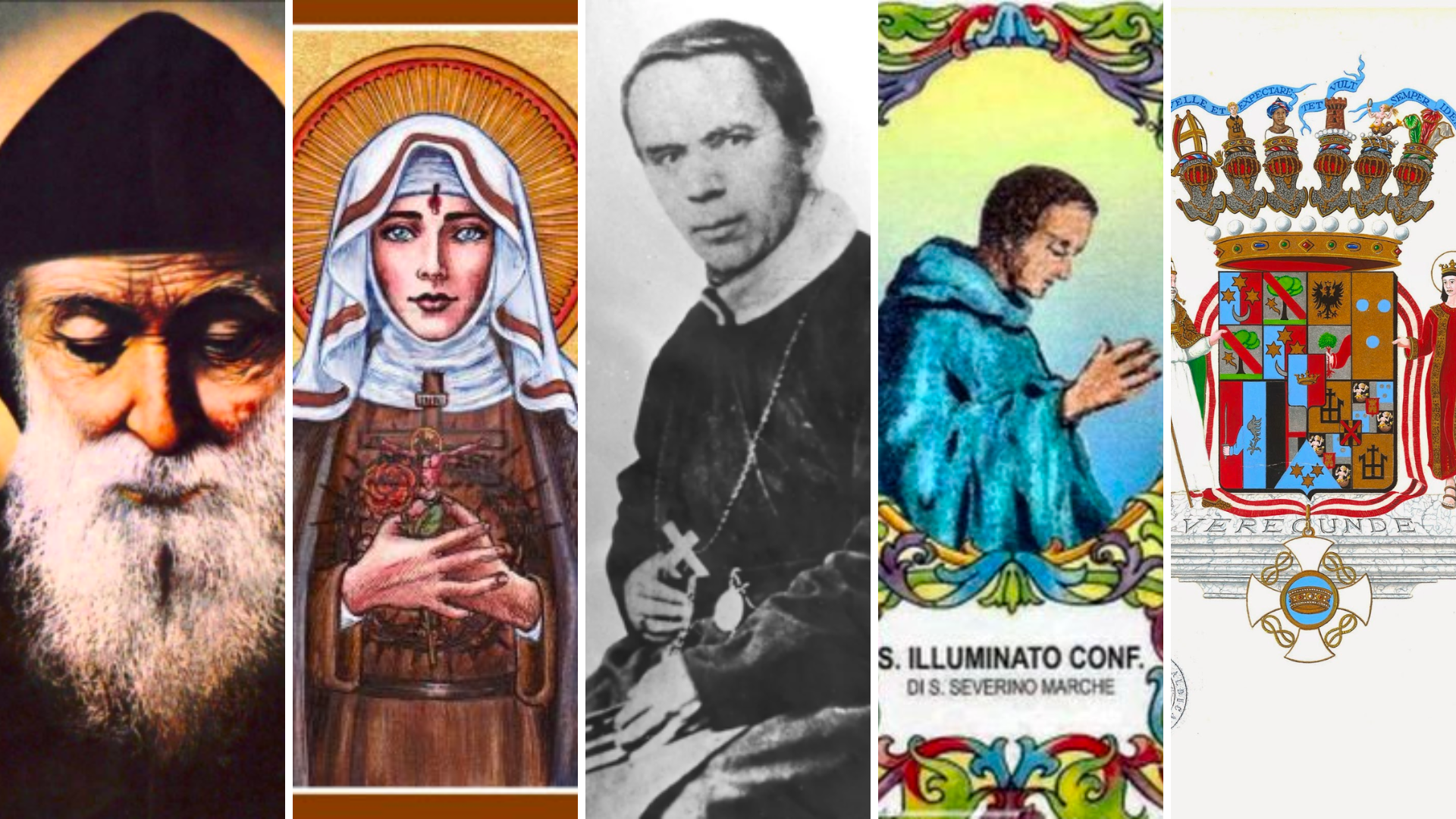
Our main Altar has the relics of three Saints: Saint Charbel Makhlouf, Saint Rita of Cascia, and Saint John Neumann. In addition, the Altar in our Chapel has two other Saints’ relics: Saint Illuminatus and Saint Verecundus. Here’s a little more about each of these five Saints, and how they are connected to All Saints Catholic Church.
Saint Charbel Makhlouf | Main Altar
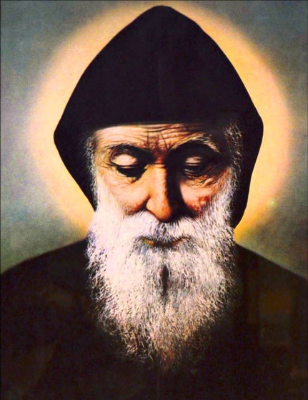 |
Saint Charbel, whose Feast Day is July 24th, was a Priest and Monk who lived in Lebanon in the 19th Century. He was renowned, even during his life, for his authentic spiritual life, and for the advice he gave others. St. Charbel was a Maronite Priest, meaning he belonged to the ancient part of the Church that grew up in Apostolic times in Lebanon. He was Beatified in 1965 and Canonized in 1977 by Pope St. Paul VI, who described him as a new, eminent member of monastic sanctity,” who “through his example and his intercession is enriching the entire Christian people.” Saint Charbel’s connection to All Saints has to do with our founding Pastor, Monsignor Raphael Kamel. Father Kamel was not a Maronite, but he was Lebanese and had a great devotion to St. Charbel. So, upon creation of this Parish, only a few years after St. Charbel’s Canonization, Father Kamel arranged to have His relics obtained and placed in our Altar. |
Saint Rita of Cascia | Main Altar
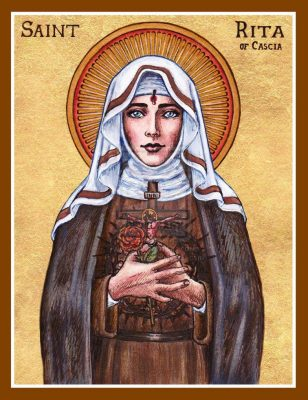 |
Saint Rita, whose feast day is May 22, lived in Cascia, Italy between the years 1381 and 1457. Her life was plagued by the ‘vendetta’ culture of her place and time, and her husband and sons were all killed in brawls during her life. As a widow, she felt the desire to enter religious life, and became a renowned Augustinian Nun who received the Stigmata and cared for the sick and grieving. Saint Rita’s connection to All Saints is a little different. All Saints was founded out of an abundance of parishioners at three of our neighboring parishes: St. Mark the Evangelist in Plano, St. Paul the Apostle in Richardson, and St. Rita in Dallas. So, in honor of the parish homes our founding members left, they arranged for a relic of St. Rita to be placed in our Altar. |
Saint John Neumann | Main Altar
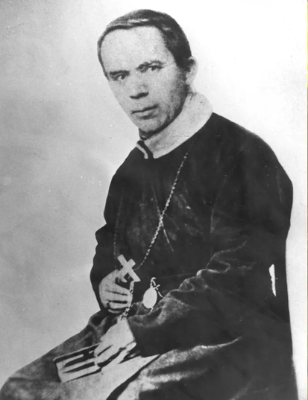 |
Saint John Neumann, whose feast day is January 5, was the first male U.S. citizen to be Canonized. Growing up and attending Seminary in what is now the Czech Republic, St. John Neumann was Ordained a Priest for the Diocese of New York in 1836. He later joined the Redemptorists- a religious Order that still exists today, which is dedicated to parish and foreign missions. He was appointed and Ordained Bishop of Philadelphia in 1852 and died in 1860. His role in building up the Catholic Church in the United States cannot be understated, and he is credited as having begun the Diocesan Catholic School system in America. His connection to All Saints came through his patronage of Teachers and Altar Servers. Monsignor Kamel wanted to emphasize the importance of those roles within our Parish, even long before the opening of All Saints Catholic School. He is also significant as an American Saint, as All Saints is all about making Saints here in Dallas. |
Saint Illuminatus | Chapel Altar
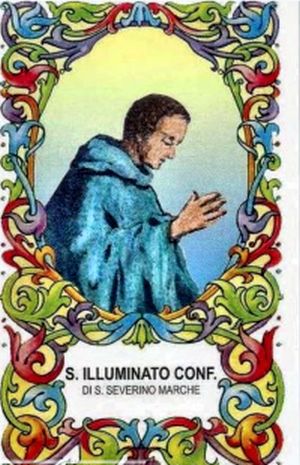 |
Very little is known about St. Illuminatus, but his feast day is May 11, and we know hat he died around the year 1000 in San Severino, Italy. His name translates from Latin to "the Enlightened". He was a Benedictine Monk at San Severino’s San Mariano Abbey. His connection to All Saints is more coincidental: when constructing the Chapel’s Altar, an Altar stone was taken from a decommissioned Church or Altar elsewhere and placed in this Altar. We have yet to track down the original location of that Altar or the person who obtained the Altar stone with these relics, but they have firmly become a part of our Parish! |
Saint Verecundus | Chapel Altar
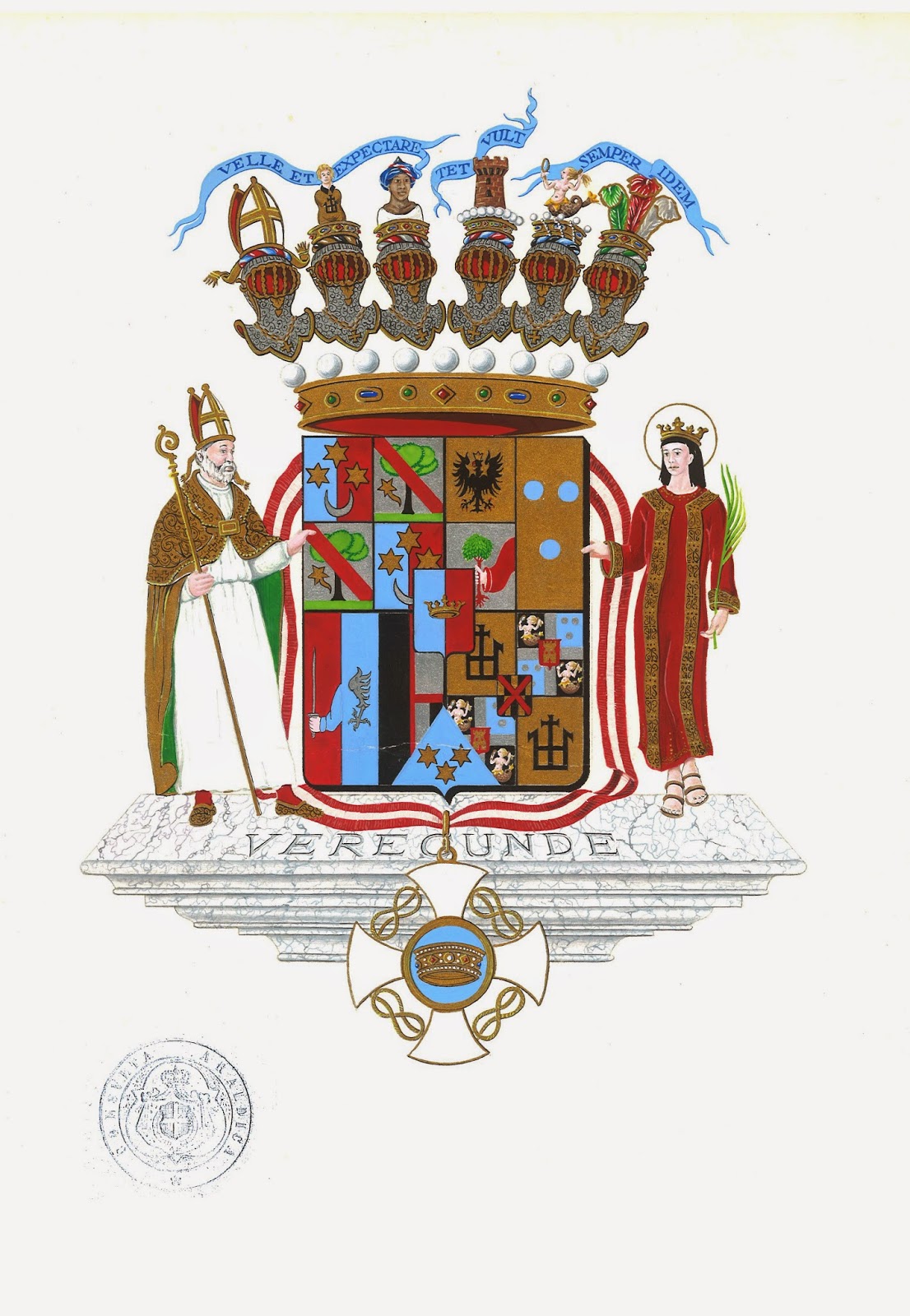 |
Even less is known about St. Verecundus, whose feast day is October 22, except that he was the Bishop of Verona, Italy, and died in the year 522. He would have had to manage the declining state of affairs in his city after the fall of the Roman Empire and the rule of the Visigoths. His Episcopal Crest is pictured to the left, featuring his Episcopal Motto: "Velle et expectare tet vult semper idem" ("To want and to expect that God always wills the same"). His relics came to All Saints in the same mysterious Altar stone as Saint Illuminatus. |
Sources
Britannica, T. Editors of Encyclopaedia. "St. John Neumann." Encyclopedia Britannica, March 24, 2022. https://www.britannica.com/biography/Saint-John-Neumann.
Catholic Online. “St. Verecundus.” Catholic Online. Accessed June 13, 2022. https://www.catholic.org/saints/saint.php?saint_id=1948.
CNA. “St. Charbel Makhlouf.” Catholic News Agency, 2022. https://www.catholicnewsagency.com/saint/st-charbel-makhlouf-534.
Kosloski, Philip. “Why Are Saints' Relics Placed Inside Altars?” Aleteia, January 29, 2020. https://aleteia.org/2020/01/29/why-are-saints-relics-placed-inside-altars/.
Media, Franciscan. “Saint John Neumann.” Franciscan Media, January 5, 2021. https://www.franciscanmedia.org/saint-of-the-day/saint-john-neumann.
Media, Franciscan. “Saint Rita of Cascia.” Franciscan Media, May 22, 2021. https://www.franciscanmedia.org/saint-of-the-day/saint-rita-of-cascia.
“Pope St. Felix I.” Catholic Encyclopedia: Pope St. Felix I. Accessed June 13, 2022. https://www.newadvent.org/cathen/06029b.htm.
Pope, Msgr. Charles. “The Biblical and Heavenly Roots of the Sacred Liturgy.” Community in Mission. Archdiocese of Washington, June 10, 2015. http://blog.adw.org/2010/09/the-biblical-and-heavenly-roots-of-the-sacred-liturgy/.
“St Illuminatus of San Severino.” Catholic Daily Readings, May 25, 2022. https://catholicreadings.org/saint-illuminatus-of-san-severino/.
